Ouvir artigo:
Num relance
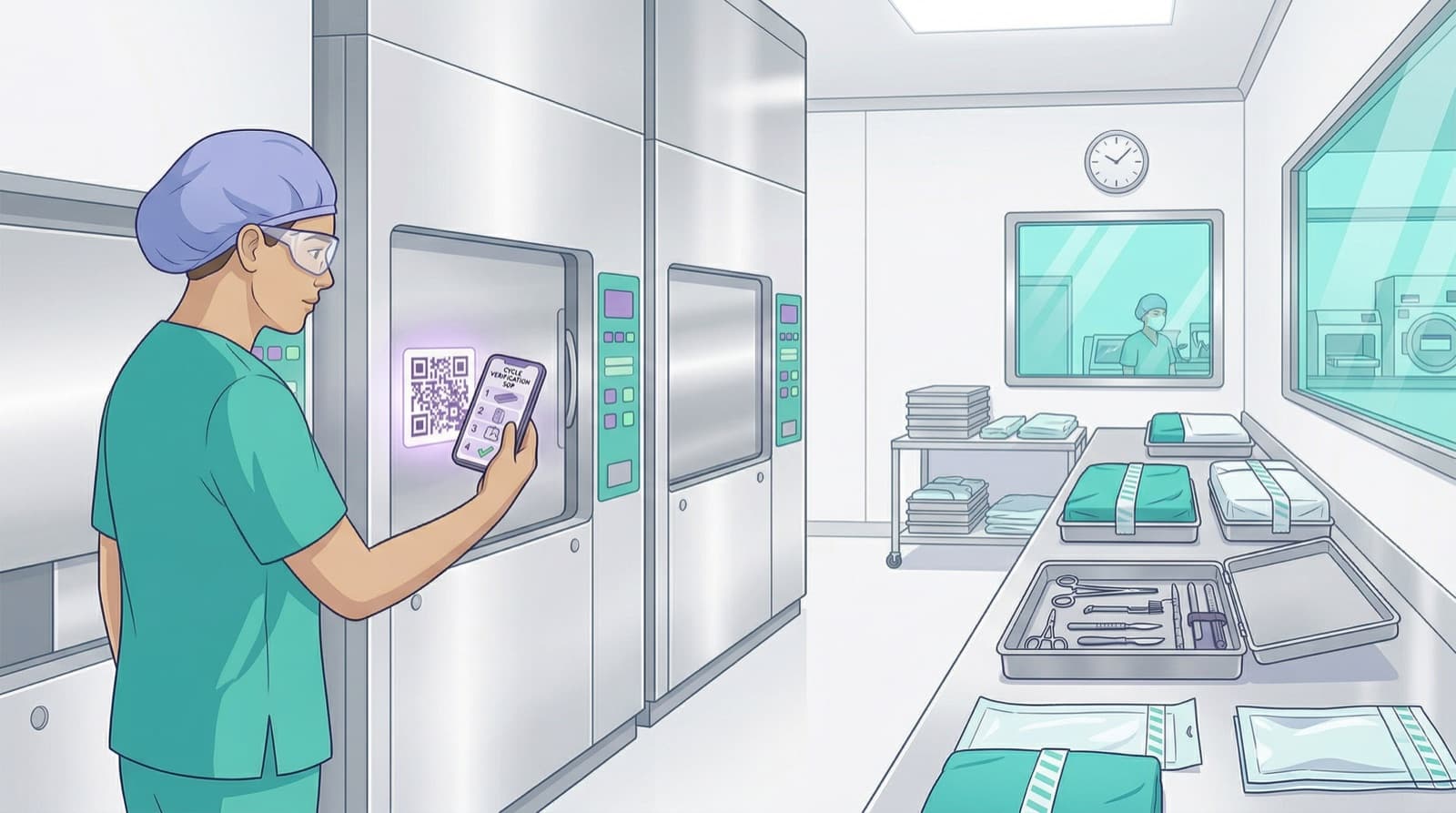
- 1.The CSSD (central sterile services department) runs like an industrial plant — the ideal entry point for Video-to-SOP in hospitals.
- 2.Massive nursing shortages require fast onboarding: visual procedures via QR code at every device are the most efficient path.
- 3.Automatic face blurring protects staff (works council) and patients (privacy) at the same time — with no manual work.
- 4.European and national hospital-digitization funds earmark billions — Soperion can be positioned as an eligible digitization solution.
Why the CSSD is the ideal entry point, how shortages of hundreds of thousands of nurses can be onboarded faster, and why automatic face blurring is the decisive feature for clinics.
Hospitals are a surprisingly ideal use case for Video-to-SOP technology. The CSSD (central sterile services department) runs like an industrial plant with autoclaves, washer-disinfectors, and strict process flows. JCI and national clinic certifications require end-to-end procedural documentation. Hundreds of thousands of missing nurses need to be onboarded fast. And national digitization funds earmark billions for clinic modernization. Soperion creates procedures automatically from video — with automatic face blurring to protect staff and patients.
Why hospitals need Soperion
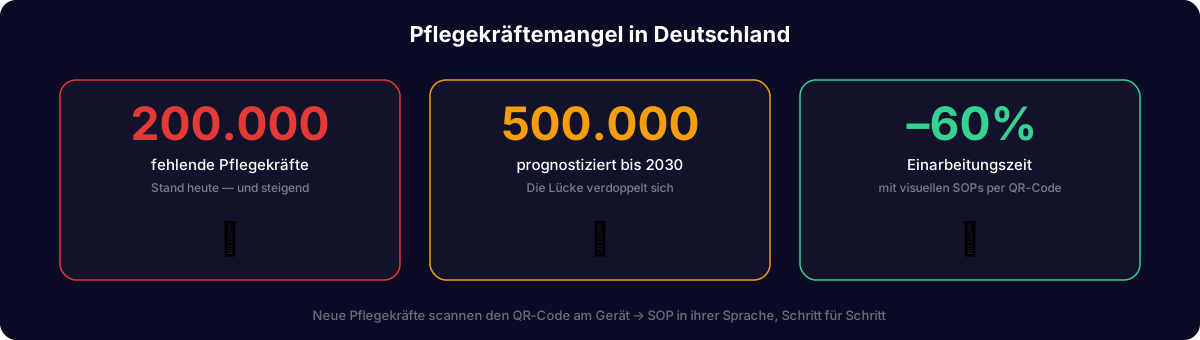
Europe is short hundreds of thousands of nurses. The gap will keep widening by 2030. Every new hire — domestic or internationally recruited — must become productive in weeks, not months. At the same time, national laws are expanding the scope of nursing duties. New authority requires new documented procedures — and it requires them now.
Visual procedures via QR code at every device, every ward, and every dispenser are the only way to handle this challenge. The internationally recruited nurse scans the code and sees the procedure — in their language, with images, step by step.
Entry point: CSSD as an industry-adjacent pilot area
The ideal entry point in a hospital is not bedside care — it is the CSSD (central sterile services department). Processes there are identical to industrial production: instrument cleaning in a washer-disinfector, steam sterilization in an autoclave, packaging in sterile barrier systems, and release by the CSSD lead. Even LOTO procedures on large equipment are needed.
Soperion was developed in heavy industry and is in use at a FTSE-250 group. The CSSD is the hospital area closest to industrial production — the transfer is direct. From the CSSD, use can expand into medical and building-services maintenance (ventilators, emergency generators), hygiene routines (hand disinfection, surface disinfection, isolation rooms), and clinical procedures.
Automatic face blurring: the decisive feature for clinics
Data protection is especially sensitive in hospitals. Staff faces (works council) and patient faces (patient privacy) must be protected. Soperion's automatic face blurring anonymizes every face in the video — automatically, with no manual work. That removes the most common works-council objection and the top privacy concern at the same time.
Perguntas frequentes
- Can Soperion be financed through hospital digitization funds?
- Soperion can be positioned as an eligible digitization solution under funding goals like digital process documentation and knowledge retention.
- Why do hospitals call them procedures instead of SOPs?
- In hospitals the term procedure (or clinical procedure) is more common. Soperion uses that terminology in clinical contexts.
- Does Soperion also work for clinical procedures on patients?
- Soperion documents procedures, not patients. For CSSD, medical technology, and hygiene it is directly usable. For clinical procedures you can record demonstrations on phantoms or models.
- How does Soperion protect the privacy of patients and staff?
- Soperion's automatic face blurring anonymizes every face in the video — automatically and without manual work. That protects staff and patients equally.