Poslechnout článek:
V kostce
- 1.Visual SOPs via QR code reduce onboarding time by 50 to 70 percent — from weeks to days.
- 2.The best operator demonstrates the process once, and every new hire learns from that standard. No more variance between shifts or sites.
- 3.Classic 1:1 onboarding does not scale to 200 new pickers during peak season or 50 seasonal workers starting the same day.
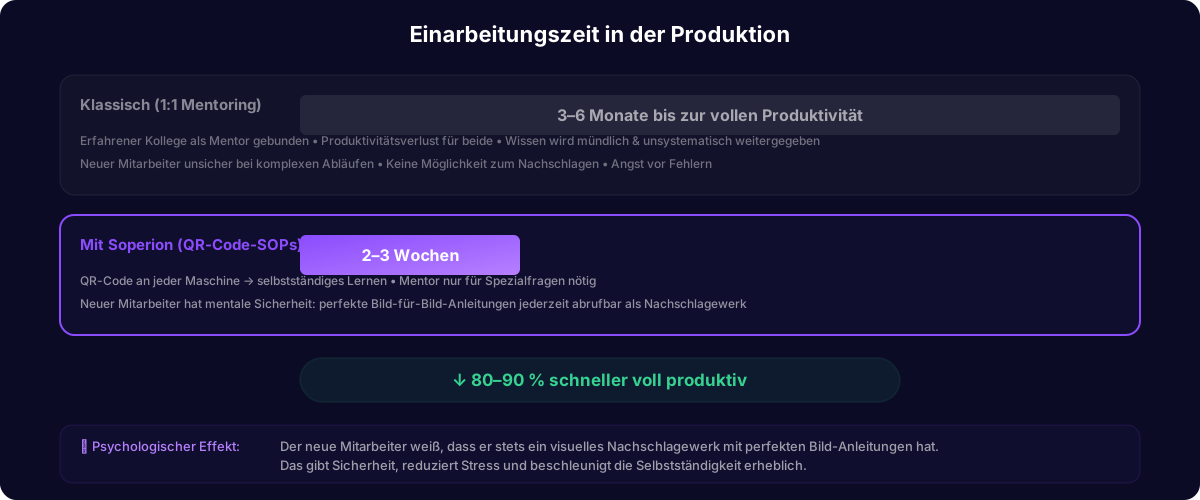
A new operator in production needs 2 to 4 weeks before they can work independently. Visual SOPs via QR code at the workstation cut that down to 3 to 7 days.
Onboarding a new operator in production takes on average 2 to 4 weeks until they can work independently. With 20 to 40 percent temporary labor and high turnover across many industries, that is an enormous burden — both on the experienced colleagues tied up as mentors and on productivity itself. Visual work instructions via QR code at the workstation can cut onboarding time by 50 to 70 percent.
The onboarding problem in industry
In steel, automotive, food processing, logistics, and quick-service restaurants, companies share the same problem: new hires have to become productive fast — but onboarding ties up experienced colleagues who should be producing themselves during the same hours.
In peak periods it becomes critical: in logistics, 200 new pickers arrive on a single Monday during peak season. In food plants, 50 seasonal workers start on the same day. In quick-service restaurants, the entire workforce rotates every 6 to 8 months. Classic 1:1 onboarding is simply impossible at these numbers.
The solution: QR code at the workstation
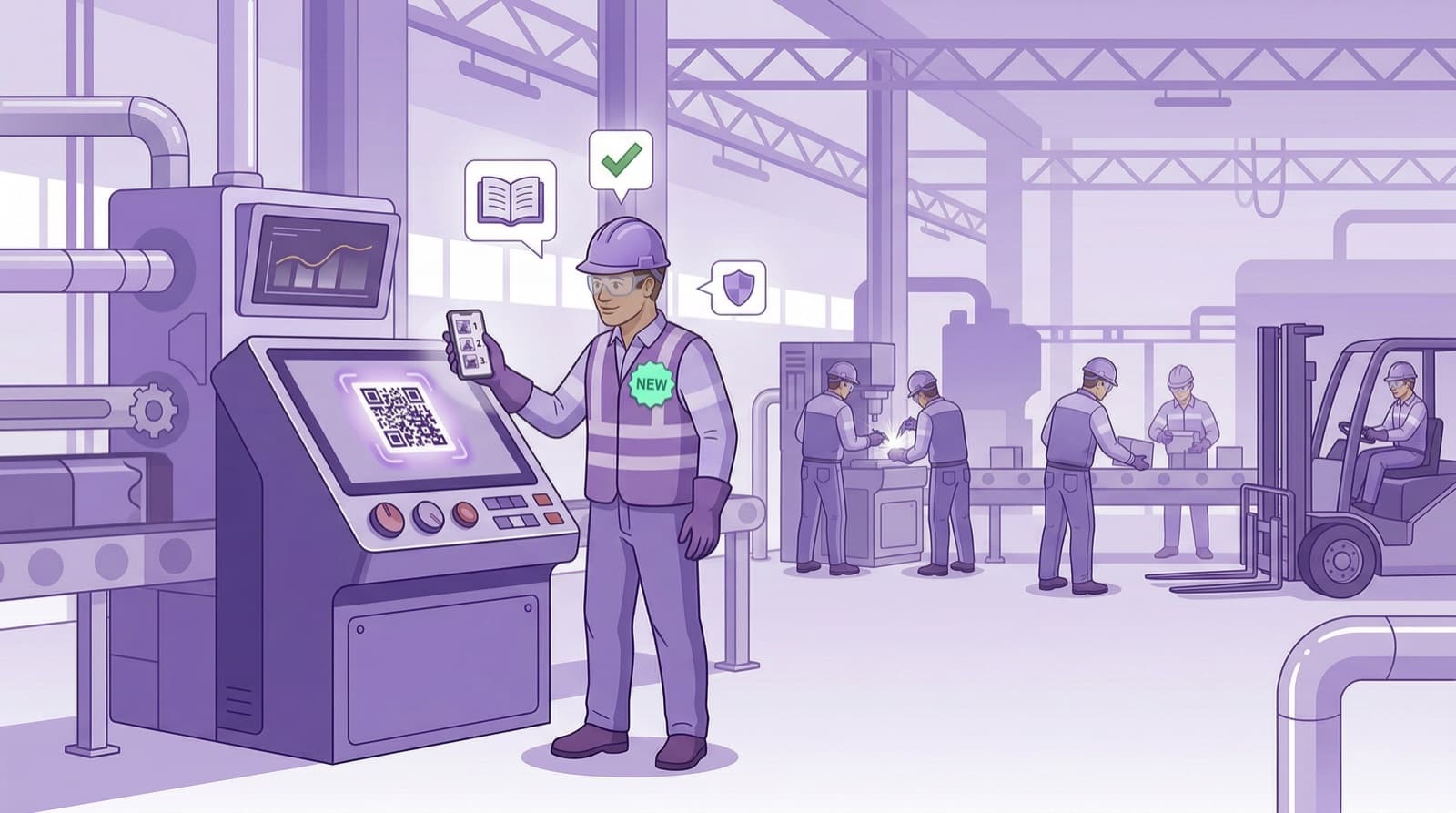
The most effective onboarding method for production is remarkably simple: at every workstation there is a QR code. The new operator scans it with their smartphone and sees a visual step-by-step instruction with images from the real process. They can start working immediately — no trainer, no classroom session, no language skills required.
Soperion generates these visual work instructions automatically from process videos. The best operator demonstrates the process once, a colleague films and narrates, and every future new hire learns from that best-practice standard. Not from a shift lead who may do it differently. Not from a colleague who has only been there two months and is still unsure. From the very best.
That also means: every shift works to the same standard. No more variance between day and night shift, between plant A and plant B. One video, one standard, everywhere.
Industries with the biggest onboarding problem
The industries that benefit most from visual SOPs for onboarding are logistics and warehousing with peak-season challenges of 200 or more new pickers at once, quick-service restaurants with 150 percent annual turnover, food production with seasonal labor and multilingual teams, facility management with 120 percent turnover and 30 or more languages, automotive suppliers with 20 to 40 percent temporary workers, and hotels with 90 percent turnover in housekeeping.
Across all of these industries, classic onboarding through experienced colleagues no longer scales. Visual SOPs via QR code are the only way to bring hundreds of new hires up to the same standard at the same time.
Časté dotazy
- How quickly do new operators become productive with visual SOPs?
- Field experience shows a 50 to 70 percent reduction in onboarding time. Instead of 2 to 4 weeks to reach independence, often just 3 to 7 days.
- Does it also work without German language skills?
- Yes — visual SOPs with images from the real process are language-independent and easy to follow. Automatic translation into additional languages is in development.
- Do new operators need a company smartphone?
- No. The QR code works with any personal smartphone. No app download, no login required — the code opens the SOP in the mobile browser.