Poslechnout článek:
V kostce
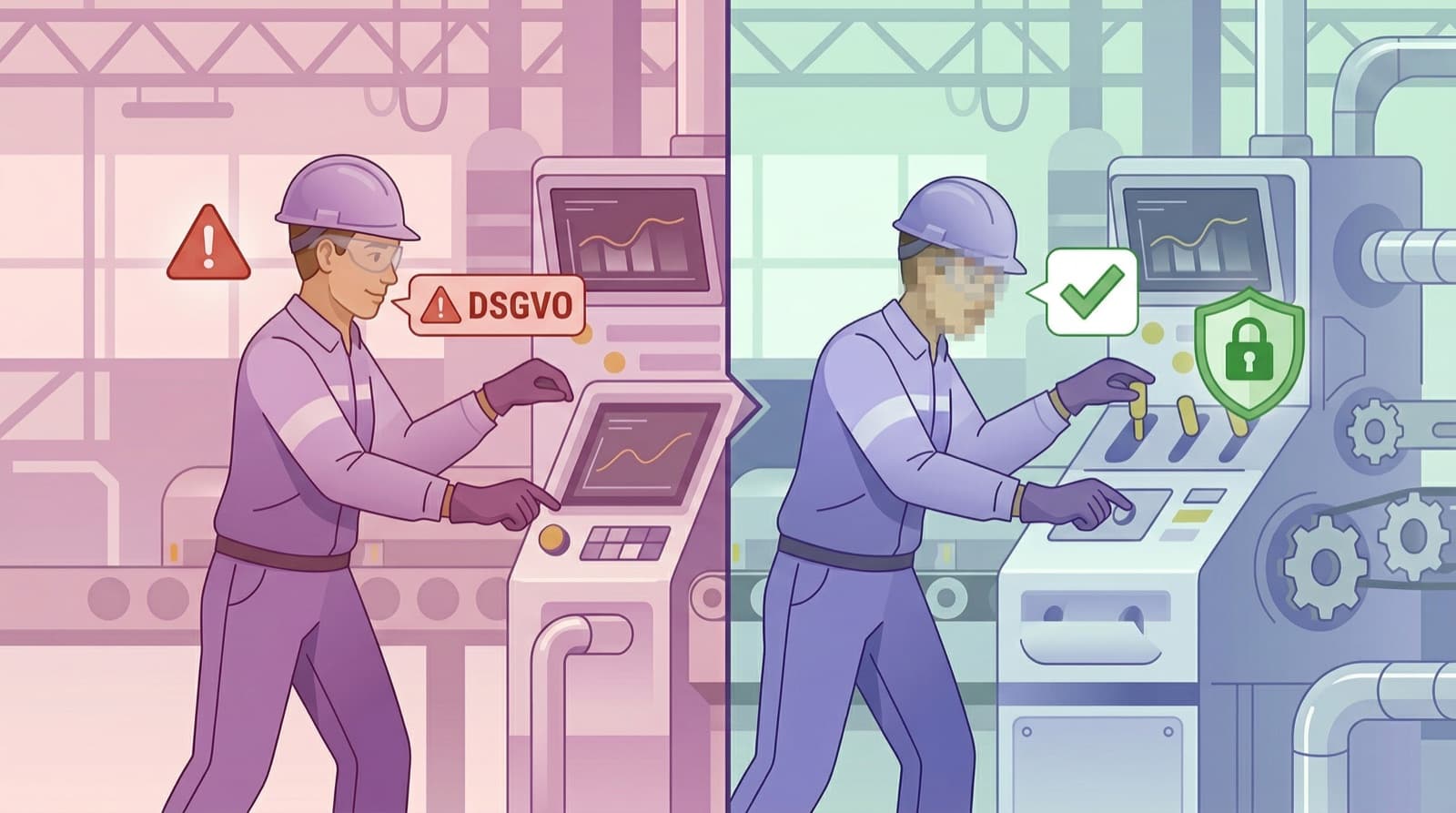
- 1.Soperion anonymizes every face in the video automatically — no manual work, no biometric data stored.
- 2.Process documentation is a legal duty under occupational-safety, hazardous-substances, and work-equipment regulations — the question is not whether, but how fast.
- 3.At no Soperion customer has the works council blocked the rollout after seeing the face blurring in action.
- 4.In hospitals, face blurring protects staff and patients at the same time.
Soperion documents processes, not people. Every face is anonymized automatically, with no manual work. Why works councils welcome Soperion instead of blocking it.
When companies want to introduce video-based work instructions, one question always comes up: what will the works council say? The answer is simpler than many assume — because Soperion documents processes, not people. The finished work instruction shows hands, tools, and machines — but no identifiable individuals.
Why process documentation is not negotiable
Documented work instructions are not a voluntary measure. They are a legal duty, a liability question, and a prerequisite for safe work. The German Occupational Safety Act (ArbSchG §12) requires employers to demonstrably train staff on safety and health protection. The Hazardous Substances Ordinance (GefStoffV §14) requires written operating instructions for every hazardous-substance process. The Work Equipment Ordinance (BetrSichV) requires documented procedures for the use of work equipment. Equivalent obligations apply under GDPR-aligned occupational-safety law across the EU.
From a liability perspective the picture is even clearer: if a workplace accident happens and no documented work instruction exists, the employer is liable — personally, under civil law, and in some cases under criminal law. A correct, current, and demonstrably provided SOP is the most important liability protection for companies and managers.
The works council: partner, not opponent
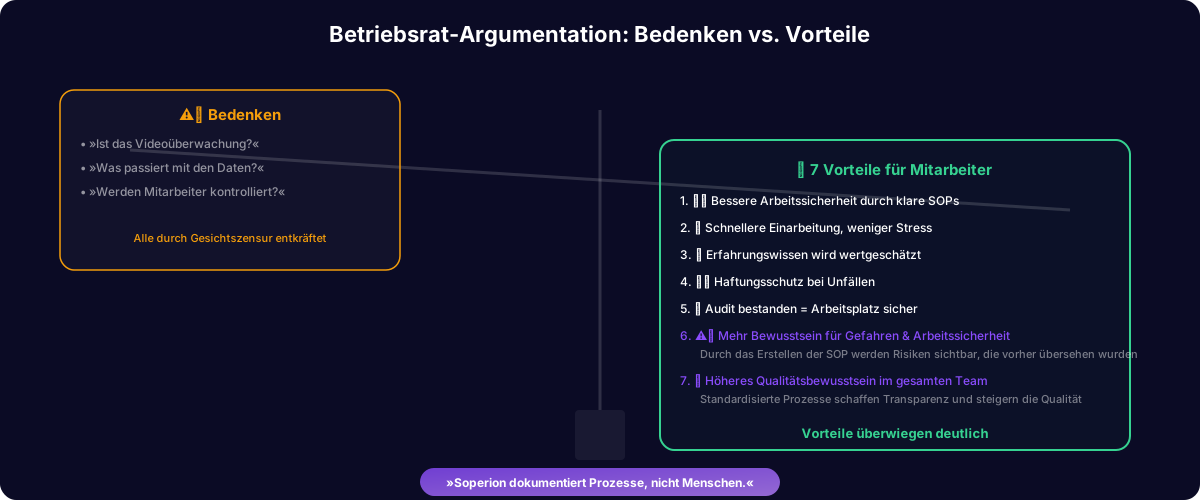
Under German works-constitution law (§87 para. 1 no. 6 BetrVG), the Betriebsrat has information and co-determination rights for technical systems capable of monitoring behavior or performance. Soperion, however, is not a monitoring technology. Because of automatic face blurring, no individuals are identifiable in the finished work instruction. No performance data is collected, no working times are measured, no behavioral profiles are created.
At a FTSE-250 industrial group with a strong worker representation, this process ran smoothly — the works council welcomed Soperion instead of blocking it. Worker representatives have a fundamental interest in putting occupational safety and quality first. Documented work instructions with safety notes and QR-code access directly at the workplace are exactly what worker representatives want.
How Soperion's face blurring works
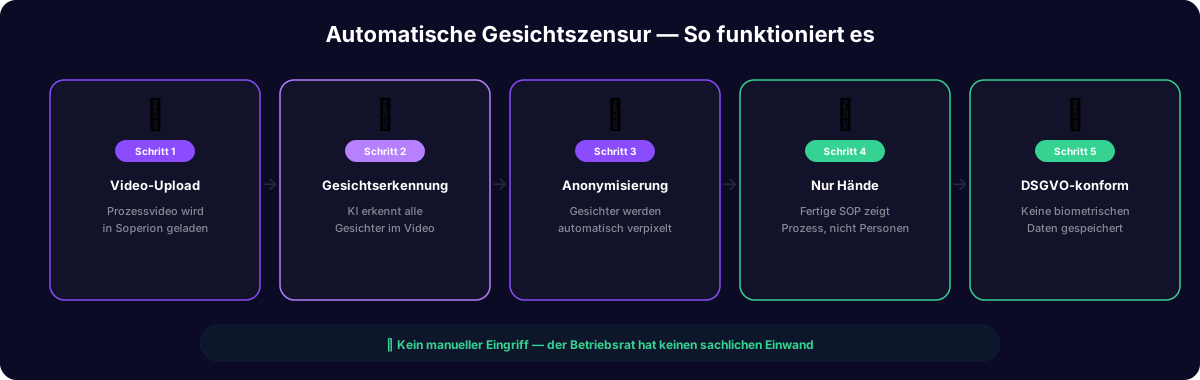
In the first step, the AI (YOLO-based pose and face detection) finds every face in every single frame of the video — foreground or background, facing the camera or turned to the side. In the second step, the detected face regions are overlaid with an anonymization filter that makes identification impossible. In the third step, screenshots for the finished work instruction are generated with the anonymized faces.
At no point are biometric data stored. Face detection serves anonymization only — never identification. There is no face database, no face IDs, no mapping to individuals.
Special importance in hospitals
In hospitals, face blurring is doubly important: not only staff faces need protection, but also patient faces that might appear in the background by accident. Soperion anonymizes every face — whether it belongs to a staff member, patient, visitor, or bystander. That satisfies both labor-law requirements and patient data protection at the same time.
Časté dotazy
- Can the works council block Soperion?
- In practice, no — not when automatic face blurring is active. Process documentation is a legal duty of the employer. In every rollout so far, the works council has agreed after seeing the face blurring in action.
- Are background faces detected too?
- Yes. Soperion's video analysis detects and anonymizes all faces in the video, both in the foreground and in the background. Partially occluded faces and profile views are detected as well.
- Does face blurring meet GDPR requirements?
- Yes. Thanks to automatic anonymization, no personal data within the meaning of the GDPR is processed in the output. No biometric data is stored. The SOP documents the process, not the person.
- What do you see in the finished SOP instead of the face?
- The screenshots show the work step with anonymized faces. The focus is automatically on hands, tools, and the machine — the elements that are relevant for the work instruction.